

In a groundbreaking development heralded by researchers and technologists alike, engineers at Northwestern University have taken a significant leap forward in neural technology by successfully printing artificial neurons that can communicate with living brain cells. This pioneering work, led by a team of materials scientists and bioengineers, employs the cutting-edge technique of aerosol jet printing to fabricate flexible, cost-efficient neural devices. These devices, crafted from electronic inks composed of nanoscale flakes of molybdenum disulfide (MoS2) and graphene, are deposited onto pliable polymer substrates. The artificial neurons have been tested on mouse brain tissue, where they produced electrical signals robust enough to activate living neurons. This remarkable achievement marks an essential milestone in the development of biocompatible electronics capable of interfacing seamlessly with the nervous system. The implications of this study, recently published in Nature Nanotechnology, are vast, opening new avenues for brain-machine interfaces, neuroprosthetics, and potentially revolutionary computing systems that mimic brain functions while consuming minimal power.
Context
The concept of creating artificial neurons is not new; it has occupied the minds of scientists and engineers for decades. However, the prospect of developing devices that can seamlessly integrate with biological systems has remained elusive due to the complexities of mimicking the intricate signaling mechanisms of the human brain. Northwestern University’s team, however, has approached this challenge with a fresh perspective, employing advanced materials and innovative printing techniques to overcome previous limitations. The use of molybdenum disulfide (MoS2) as a semiconductor and graphene as a conductor represents a strategic choice, leveraging the unique electronic properties of these materials to achieve a high degree of functionality.
This week, the research has drawn considerable attention not only because of its scientific novelty but due to its potential implications for a range of applications, from medical to computational. Historically, work in this field has aimed at creating biocompatible materials that can reliably interface with neural tissue without causing adverse reactions. The success of Northwestern’s artificial neurons in generating realistic electrical signals marks a significant step forward, suggesting that a new class of neural prosthetics might soon be within reach.

Prior to this achievement, efforts to connect electronics with biological neurons faced obstacles related to material compatibility, signal fidelity, and device flexibility. Traditional silicon-based electronics, though effective in many ways, often lacked the flexibility and biocompatibility needed for seamless integration with soft, living tissues. The advancement made by Northwestern University not only tackles these issues head-on but also sets a precedent for future explorations into bioelectronics and the enhancement of human neurophysiological capabilities.
What Happened
The research team at Northwestern University utilized aerosol jet printing, a technique that allows for the precise deposition of electronic inks onto substrates. These inks are formulated from nanoscale materials, particularly flakes of molybdenum disulfide (MoS2) for semiconducting properties and graphene for electrical conduction. This method enables the fabrication of thin, flexible devices that can be tailored to mimic the functionality of biological neurons. The choice of materials is critical; MoS2 and graphene provide excellent electrical characteristics essential for mimicking the action potentials of neurons.
The artificial neurons were rigorously tested on mouse brain tissue, with experiments conducted to assess their ability to generate electrical signals analogous to those produced by real neurons. The results were promising: the devices successfully activated living neurons, demonstrating a level of functionality that had previously been unattainable with such biocompatible materials. This experiment’s success underscores the potential of these devices to serve as the foundation for future brain-machine interfaces.
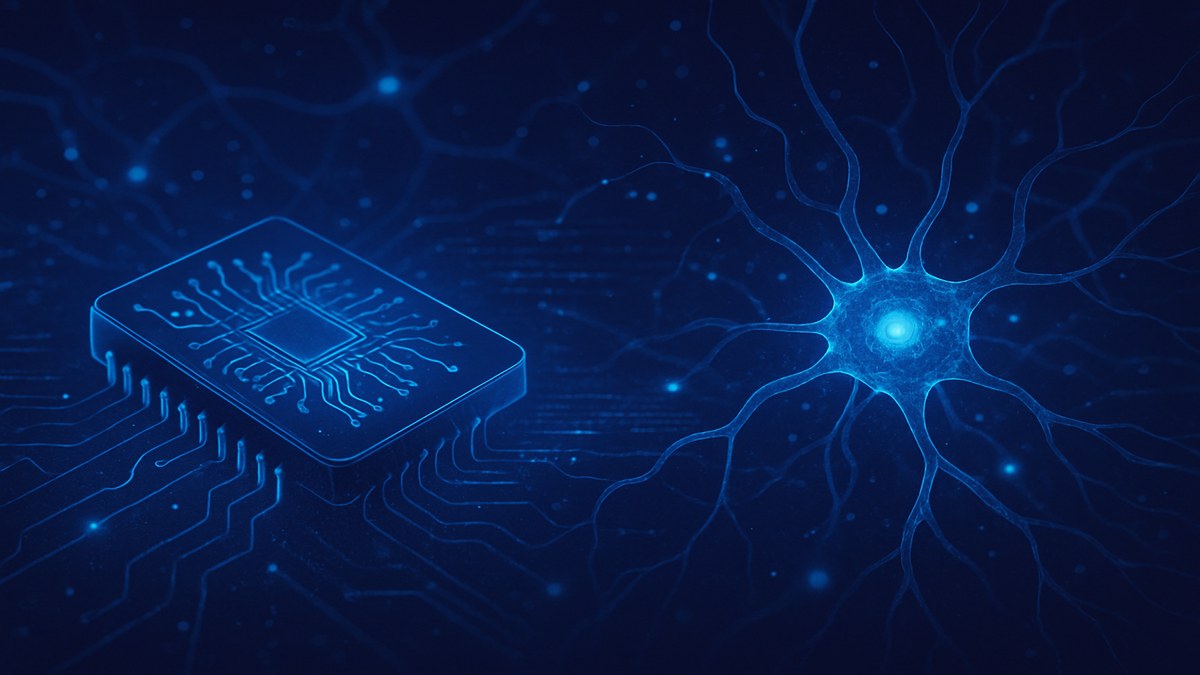
Published in the prestigious journal Nature Nanotechnology, the study has been lauded for its innovative approach and practical implications. The paper outlines detailed methodologies for the aerosol jet printing process and the material preparation, providing a roadmap for future research and development. By achieving a high degree of integration between artificial and biological systems, this study positions itself at the forefront of neurotechnology research, promising enhancements in both prosthetic applications and computational systems designed to emulate neural processing.
Why It Matters
The implications of Northwestern University’s breakthrough extend far beyond the laboratory, offering potential solutions to some of the most pressing challenges in medicine and technology. The ability to create artificial neurons that communicate effectively with living brain cells may revolutionize the field of neuroprosthetics. These devices could lead to the development of advanced implants that restore or enhance sensory and motor functions, providing new hope for individuals with disabilities affecting hearing, vision, or movement.
Moreover, the research opens up exciting possibilities for brain-machine interfaces, which could transform the way humans interact with computers and other digital devices. By using devices that mimic neural signaling, users could interact with machines more intuitively, potentially leading to new modes of communication and control. This has profound implications for industries ranging from gaming to assistive technologies, where such interfaces could provide unprecedented levels of accessibility and user engagement.
On a broader scale, the development of these artificial neurons could influence the future of computing. Current technologies are struggling to keep up with the demands for power and efficiency, as data processing needs continue to grow exponentially. Brain-like computing systems, which operate based on principles similar to those of biological neurons, could offer a more sustainable model. These systems promise to perform complex operations using a fraction of the energy consumed by conventional methods, aligning with global efforts to reduce carbon footprints and enhance energy efficiency in technology.
How We Approached This
In covering this story, we at AI Pulse Weekly focused on both the technical and broader implications of the research conducted by Northwestern University. Our editorial team consulted the original study published in Nature Nanotechnology to ensure accuracy in the reporting of methodologies and outcomes. We also reached out to experts in the fields of neurotechnology and bioengineering to provide additional insights into the significance of the findings.
Our emphasis was placed on how this research could impact future technology developments, particularly in the realm of neuroprosthetics and brain-machine interfaces. By highlighting the potential applications and benefits, we aim to inform our readers of the transformative possibilities that such advancements hold. We chose to avoid overly technical jargon, making the information accessible to a broad audience while maintaining the depth of analysis expected by our tech-savvy readership.
Frequently Asked Questions
What materials are used to create the artificial neurons?
The artificial neurons are created using electronic inks composed of nanoscale flakes of molybdenum disulfide (MoS2) as a semiconductor and graphene as an electrical conductor. These materials are deposited onto flexible polymer substrates using aerosol jet printing, enabling the creation of devices that mimic the electrical properties of biological neurons.
What potential applications do these artificial neurons have?
The artificial neurons have potential applications in neuroprosthetics and brain-machine interfaces. They could lead to advanced implants that restore or enhance sensory and motor functions, and facilitate new ways of interacting with digital devices. Additionally, these devices could inspire brain-like computing systems, offering more energy-efficient data processing solutions.
How does this development impact the field of neurotechnology?
This development represents a significant advancement in neurotechnology by demonstrating the feasibility of creating biocompatible devices that can effectively communicate with living brain cells. It paves the way for future innovations in medical implants and computational systems that mimic the brain’s efficiency, potentially transforming both healthcare and technology industries.
Looking ahead, the breakthroughs achieved by Northwestern University in printing artificial neurons capable of interacting with living brain cells set a new benchmark in the field of bioelectronics. As researchers continue to refine these technologies, we anticipate further developments that could dramatically alter the landscape of neurotechnology, offering transformative solutions for rehabilitation and beyond. Ultimately, this pioneering research underscores the critical role of interdisciplinary collaboration in pioneering the next generation of human-machine interfaces, with the potential to redefine our interaction with technology and enhance our understanding of the brain’s intricate functions.