
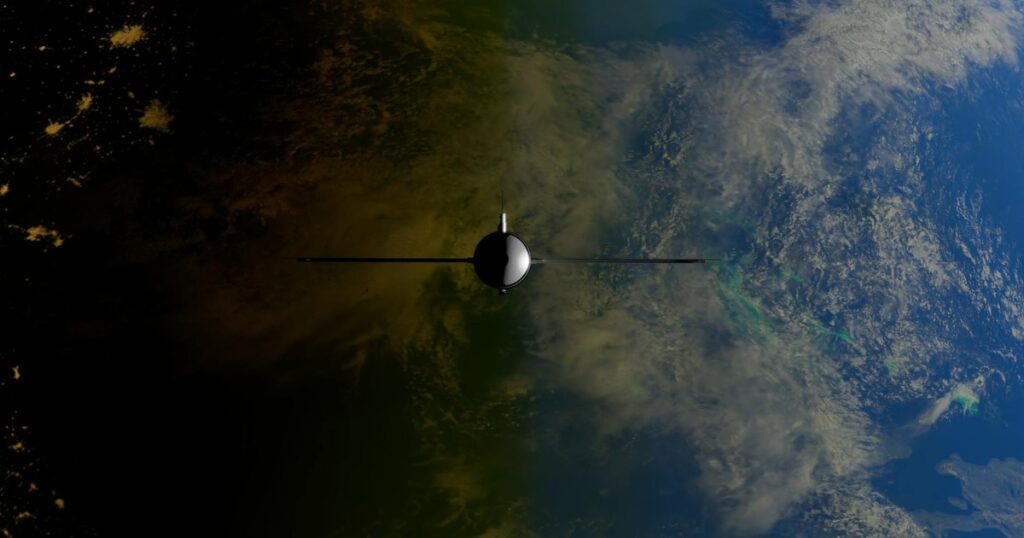
A spacecraft carrying four astronauts completed a 700,000-mile journey around the Moon and landed in the Pacific Ocean near California on Friday evening. This event signaled the true commencement of the Artemis era for NASA, its international collaborators, and humanity as a whole. The conclusion of the Artemis II mission represents the first human venture into deep space in over fifty years. While NASA executed this difficult feat with apparent ease, earning commendation, it now confronts a critical question: what is the next step?
“The work ahead is greater than the work behind us,” stated Amit Kshatriya, NASA’s associate administrator, following the landing. Future missions will involve more intricate operations, necessitate multiple vehicles, and ultimately aim for a landing on another planetary body. To achieve these goals, NASA must remove the training wheels and advance to more demanding phases.
NASA has recently updated its plans for Artemis III and IV, introducing an intermediate mission before attempting a human lunar landing. Considerable effort is required to realize these flights. The Artemis II mission that just ended was the simplest component of the Artemis Program, often described as the lowest hanging fruit.
Here is an overview of the key components that must align for a successful human Moon landing.
Multiple NASA officials have lauded the Space Launch System rocket’s performance during the Artemis II launch on April 1. They reported that it achieved the target orbit with accuracy exceeding 99 percent. The core stage for the Artemis III mission is scheduled to depart the factory in Michoud, Louisiana, later this month, heading to Kennedy Space Center in Florida. Other rocket parts have already arrived or will arrive shortly.
Meanwhile, the Mobile Launch Tower sustained moderate damage. It will soon be transported back to the Vehicle Assembly Building in Florida for repairs and subsequent stacking operations in preparation for the next mission.